Thursday, April 24, 2008

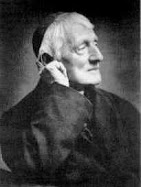
Cardinal Newman to be Beatified

It appears that the anticipated beatification of John Henry, Cardinal Newman is at last to take place. According to stories in the Sunday Times (London) on 20 April and the Birmingham Mail on 21 April, he is set to receive the title "Blessed" later this year in a ceremony at the Vatican. (I believe he is now designated as "Venerable.") The Holy See has confirmed that at least one miracle can be attributed to the intercession of Cardinal Newman. An American deacon was miraculously cured of a crippling spinal disorder after petitioning the prayers of the good cardinal. Only one more bona fide miracle is necessary for him to be officially declared a saint.

For former Anglicans like me, this is very big news. Newman is perhaps the most famous Anglican convert of all time. After founding the Oxford Movement in the 1830's, he rocked the Church of England to its core in 1845 when he converted to Catholicism, eventually becoming a priest and, of course, a cardinal. He is often referred to as the “Father of Vatican II.” In a sense all of us who have crossed the Tiber from Canterbury and its offshoots stand on his shoulders. And very broad shoulders they are indeed! He is already a sort of de facto patron saint for many former Anglicans.

Back when I was considering entering the Catholic Church and fretting over the usual protestant difficulties concerning Mary, a priest directed me to a booklet of excerpts of Newman's writings, Mary as the New Eve (Part 1, Part 2 & Part 3). It helped me to understand what lies behind the Catholic dogmas and practices concerning Mary that I found problematic. As I wrote elsewhere:

I learned that this idea – that Mary, because of her “yes” became the means of undoing Eve’s “no” – was not a new one. It was the subject of some of the writings of the Church Fathers, including St. Justin Martyr (A.D. 120-165), St. Irenaeus (120-200), Tertullian (160-240), and, later, Jerome (331-420). In other words Mary, like Eve, was a responsible moral agent, complete with the same free will that Eve perverted to her own ends. But Mary not only said yes, she did so with great joy and humility, and so, in the words of St. Irenaeus, “the knot of Eve’s disobedience received its unloosing through the obedience of Mary.” That is, she was not merely the vessel of the Incarnation, she actually cooperated in God’s plan for the salvation of the world.

My “difficulties” with the Marian dogmas were certainly not unique to me. I eventually came to understand what Newman understood, that a thousand difficulties do not add up to a doubt. I am grateful to him for helping me along in the journey to Rome.


Monday, April 21, 2008

The Washington, D.C. Papal Mass

Having posted nothing since Holy Week, I now seem to have a great deal to talk about, including the Papal Mass last Thursday at Washington Nationals (baseball) Stadium. My husband and I were fortunate enough to be chosen in our parish lottery, so we had the privilege of celebrating mass with the Holy Father (and some 46,000 of our fellow Catholics). It was a glorious spring day, the likes of which tend to be rare in Washington, where the weather can turn from winter to the tropics in short order. It had been cold here, in fact, before he arrived last Tuesday. Even the dogwood trees popped into bloom last weekend, almost on cue!

April 7 marked our first anniversary since being received into the Church, and what a great way to celebrate what has been perhaps the most significant year of our lives. Pope Benedict played a not-insignificant role in my conversion, after all, as I alluded to in my conversion story:

One of the defining moments for me in this journey was the day that the white smoke appeared from the chimney of the Sistine Chapel a little over a week after John Paul II’s death. When then-Cardinal Ratzinger appeared on the balcony a few minutes later, I knew beyond doubt this is a church that is not captured by the spirit of the age. I had read enough of the current Pope’s writings to know then that the Church would be in good hands, and I think I knew even then that I would not remain a protestant much longer.

Since then, I have come to admire this man even more, and his visit to the U.S. has only reinforced my conviction that the Church is in very good hands.

Back to the Papal Mass: I was impressed by many things, not the least by the sheer size of the event. Hats off to the organizers for pulling off the feat of serving Communion to that many people and ending on schedule. It was also encouraging to see the vast numbers of young Catholics who are evidently enthusiastic about their faith. The legacy of JPII lives on, I think.

The Pope's homily continued, as expected, the theme of his visit, "Christ Our Hope." He noted that "Americans have always been a people of hope," from the very beginning. He encouraged us to build on that legacy and to meet today's challenges with the hope found in God's love. He said that he had come here to proclaim Christ's resurrection and the coming of the Holy Spirit. That same Spirit, he said, calls us now to constant conversion as we work to renew the Church in the U.S. He mentioned the need for better Catholic catechesis, and the need to restore a genuinely Catholic culture, founded on faith and reason – both subjects near and dear to my heart. His comments about the sexual abuse scandal were, I thought, extremely gracious. His words and his actions during his visit were received in the intended spirit of healing by those directly affected by the scandal, especially the abuse victims with whom he met privately at the Vatican embassy.

Perhaps the one sour note of the mass (please pardon the pun) was the music. Much has been written on the subject already in the Catholic blogosphere. It certainly leaned rather heavily toward the let's-celebrate-us variety of liturgical music, including a heavy dose of multilingual and multicultural mush. There were occasional periods of relief--Mozart's Ave Verum, for instance, or Veni Creator Spiritus. All in all, it was rather embarrassing, especially given all the Holy Father has written and said on the subject over the years. I understand that the services in New York were something of an improvement in this regard, but I haven't yet read any very thorough accounts.

Please feel free to comment with your impressions of this event – or other aspects of the papal visit – whether you attended or not.


Sunday, March 16, 2008

The Donkey


As we begin Holy Week, I hope readers won’t take it amiss if I share something not exactly solemn. Here is one of my favorite poems by G.K. Chesterton ­– the Triumphal entry into Jerusalem from the point of view of Jesus' mode of transport:


The Donkey


When fishes flew and forests walked
And figs grew upon thorn
Some moment when the moon was blood
Then surely I was born.


With monstrous head and sickening cry
And ears like errant wings
The devil's walking parody
On all four-footed things.


The tattered outlaw of the earth,
Of ancient crooked will;
Starve, scourge, deride me: I am dumb,
I keep my secret still.


Fools! For I also had my hour;
One far fierce hour and sweet:
There was a shout about my ears,
And palms before my feet.


Thursday, March 13, 2008

The Beauty of Holiness

I have found myself jumping for joy on many occasions over the past year or so, especially since I first read the book, The Spirit of the Liturgy, written by Pope Benedict XVI when he was Cardinal Ratzinger. The publication of his Motu proprio last July expanding the use of the Traditional Latin Mass (TLM) was another reason to turn cartwheels across the floor. In general, the recent news from Rome has given me cause to revisit the following observation from my conversion story, which I posted last November:

… I have left a church [the Episcopal Church] with beautiful liturgy and inspiring architecture and a rich musical tradition, to which I have a lifelong attachment and to which my ancestors have belonged for hundreds of years…. I have gone to a church that – in the United States, at least – is only just beginning to emerge from several decades of experimentation with tacky, uninspiring modern architecture and even tackier modern liturgy and music.

Thanks to the Holy Father’s leadership, I now have even more reason to hope that the Catholic Church in America will indeed eventually recover a greater sense of the sacred in worship. In my own parish we are very much in the midst of implementing the “reform of the reform.” The Sunday noon mass is now a high mass, something that has never been seen in this particular church, as far as I know. (It was consecrated in 1967.) We have incense, and sung liturgy, and frequently, Latin. For me it is, to borrow a phrase from Proverbs, “like cold water to a thirsty soul.”

I must admit upfront to a certain bias on this subject. I grew up in the Episcopal Church when we still used a liturgy my 16th century ancestors would have recognized (the 1928 Book of Common Prayer). The music I was weaned on had that same flavor of continuity with the past, and when the sermon was dull I pored over the words of those traditional hymns (where the theology was usually better). It gave me a taste of what it means to “worship the Lord in the beauty of holiness.” Anglican plainchant was second nature to me by the time I was a teenager; to this day I can chant from memory the Venite, the Te Deum, the Benedictus, etc. – in King James English, of course. And I miss it.

When I began attending evangelical churches as an adult (including evangelical Episcopal churches), I accepted that “happy-clappy” praise music was the price I had to pay to hear orthodox preaching from the pulpit. When I was contemplating entering the Catholic Church a couple of years ago, I thought I would have to continue making that trade-off. Instead, our choir director is teaching us Gregorian Chant, and we have a hymnal (The St. Michael Hymnal) that reminds me in many ways of the old Episcopal hymnal I learned to love as a child – with even better theology, of course. Again, like cold water to a thirsty soul….

I realize that my sense of jubilation is not shared by some of my fellow Catholics, including some of my fellow parishioners. I gather that our pastor is meeting a fair amount of resistance to the changes. My husband and I have heard some complaints directly. This doesn’t surprise me. Since I am in the choir, the subject occasionally comes up, and I imagine that some people feel more comfortable talking to a choir member than to Father directly. And it isn’t unusual for people to resist change.

What does surprise me is this, and I would appreciate hearing from others about whether their own experience mirrors or contradicts my own: The people most resistant to this return to traditional worship practices tend to be over the age of 70. That is, these are people who would have been in their 30’s and 40’s when the “Spirit of Vatican II” swept the American Church in the 1960’s and ‘70’s. So they grew up with the traditional rite, just as I grew up with the 1928 Prayer Book. I would expect the older generation to welcome the expanded use of the form of the Mass they grew up with. Instead, priests in the U.S. report that younger Catholics are generally more enthusiastic about the TLM. Maybe it is partly a matter of rebelling against the rebellion of their parents and grandparents.

Now, I do understand that there were elements of the pre-1962 Mass that needed reform. That was one of the reasons for the Second Vatican Council, after all. And no doubt some of the people I talk to got swept up in the spirit of the times and welcomed the more “participatory” atmosphere of the guitar masses and the priest turning around to face them. I also understand that poor catechesis is a major factor. To my amazement I often find myself, a recent convert, in the odd position of trying to explain Catholic worship to cradle Catholics (“It’s not entertainment;” “the priest is leading us in worship, not turning his back on the congregation;” etc.)

I understand all of that. Nevertheless, I am still left scratching my head, because in my own (admittedly, anecdotal) experience, the Episcopalians who most miss the old Prayer Book are people in my father’s generation (He is 82). Oh, and a number of “throwbacks” like me. In fact, my father has never quite forgiven the Episcopal Church for that 1979 Prayer Book, which is still in use and, some 30 years later, still referred to by people my age and older as the “new Prayer Book.”

I would love to hear whether you, dear readers, have had similar experiences, and if so, how you account for this seeming anomaly.

Friday, February 22, 2008

The Chair of St. Peter

Today is the Feast of the Chair of St. Peter, which commemorates the teaching authority of the Church, the Magisterium. One of the decisive issues that drew my husband and I to the Catholic Church was the realization that, as I said in my conversion story,

... without an outside, institutional authority making the final call, it is impossible to maintain either orthodoxy or unity in the church....

Having experienced first hand what a church in chaos looks like (the Episcopal Church), we are especially grateful for this particular aspect of the Catholic Church. But of course, as we have found so many times since entering the Church, there is much more to it than that. We have learned that giving up our insistence on our own private judgment, far from being a hindrance, has instead made us more keenly aware of the meaning of true freedom in Christ.


Along these lines, I was struck by today's "Meditation of the Day," in Magnificat, by Monsignor Robert Hugh Benson, an early 20th century Anglican convert. It is entitled The Grace of the Chair of St. Peter:
Turn, then, once more to the Catholic Church and see how in the Life which she offers, as in none other, there is presented to us a means of fulfilling our end. For it is she alone who even demands in the spiritual sphere a complete and entire abnegation of self.

From every other Christian body comes the cry, Save your soul, assert your individuality, follow your conscience, form your opinions; while she, and she alone, demands from her children the sacrifice by hers, and the obedience of their will to her lightest command. For she, and she alone, is conscious of possessing that divinity, in complete submission to which lies the salvation of humanity. For she, as the coherent and organic mystical Body of Christ, calls upon those who look to her to become, not merely her children, but her very members; not to obey her as soldiers obey a leader or citizens a government, but as the hands and eyes and feet obey a brain.

Once, therefore, I understand this, I understand too how it is that by being lost in her I save myself; that I lose only that which hinders my activity, not that which fosters it. For when is my hand not itself? When separated from the body, by paralysis or amputation? Or when, in vital union with the brain, with every fiber alert and every nerve alive, it obeys in every gesture and receives in every sensations a life infinitely vaster and higher than any which it might, temporarily, enjoy in independence?

It is true that its capacity for pain is the greater when it is so united, and that I would cease to suffer if once its separation were accomplished; yet simultaneously, I would lose all that for which God made it and, saving itself, would be lost indeed…In losing my individualism I have won my individuality, for I have found my true place at last. I have lost the whole world? Yes, so far as that world is separate from or antagonistic to God’s will; but I have gained my own soul and attained immortality. For it is not I that live, but Christ that lives in me.

Monday, January 28, 2008

Another Hidden Cost of Divorce

Yet another reason to avoid divorce. "The New Alone," an editorial by Elizabeth Marquardt in Sunday's Washington Post "Outlook" section, explains how divorce makes the lives of elderly Americans and their adult children even more lonely and complicated as they grow older. In Ms. Marquardt's words,
Reduced birth rates, widespread divorce, single-parent childbearing, remarriage and what we might call "re-divorce" are poised to usher in an era of uncertain obligation and complicated grief for the many adults confronting the aging and dying of their divorced parents, stepparents and ex-stepparents. And compared with the generations before them, these dying parents and parent figures will be far less likely to find comfort and help in the nearby presence of grown daughters and sons.
Research she has conducted with Professor Norval Glenn of the University of Texas-Austin indicates that it is divorce itself - not merely the aftermath - that strains parent-child relationships. Contrary to the notion of the "good divorce," research conducted by Marquardt and Glenn indicates that even so-called amicable divorces can be especially traumatic for children, since their parents' decision to divorce often catches them completely by surprise. (I can attest to this from my own experience.)

A generation of children raised during the years when American divorce rates exploded is now faced with the prospect of a grief process further complicated by divorce.
...[I]n a divorced family, the parent who has recently died may have symbolically "died" a long time ago for the surviving parent, while for their child, both parents have been very much alive. When parents are married, there is the possibility of shared grief. A father loses a wife at the same time that a grown child loses a mother. Shared grief offers comfort and can draw remaining members of the family into a new kind of closeness. By contrast, adults from divorced families grieve the death of a parent alone. Even if the surviving parent is kind and loving, that grief cannot be shared in the way it could be if he or she had still been married to the deceased.
Of course, the situation is even further complicated when you add the stepparent factor. In some cases, like that of Ms. Marquardt, her grief at the death of her beloved ex-stepfather was short-circuited in a sense because no one around her recognized her loss. In other cases, adult children are faced with the prospect of caring for widowed stepparents to whom their obligations are unclear.

Her concluding comments suggest that what she has observed is only perhaps the tip of the iceberg:
Much of the expert literature on death and dying implicitly assumes an intact family experience. It assumes that people grow up with their mothers and fathers, who are married to each other when one of them dies. Some scholars are beginning to investigate aging and dying in families already visited by divorce. But most scholars and the public still give scant attention to the loss of other parent figures or to the deeply complicating, long-lasting effects of family fragmentation.

Nearly 40 percent of today's adults have experienced their parents' divorce. Increasing numbers of younger adults were born to parents who never married each other at all. I am certain, because I'm one of those living it, that the painful contours of the new American way of death will be discovered and defined by my own generation for years to come.
Sobering words indeed. But not, I believe, an excuse for despair. The prospect of loneliness in one's twilight years may instead serve as an inducement for couples tempted by divorce to work things out instead. Couples tempted to play at being a family by having children without benefit of marriage can add this to the growing list of reasons that this is a very bad idea.

Note: You will have to sign on to the Post website to access their archives, but the service is free, at least for recent articles.

Thursday, January 10, 2008

Jesuit Stumbling Blocks

The latest news from Rome is encouraging for those of us who care about doctrinal orthodoxy. The Vatican news agency, Zenit, reports that the head of the Vatican office in charge of religious orders spoke recently to a gathering of Jesuits and urged them, in effect, to clean up their act, especially with regard to obedience to the Church’s teachings.

In his homily at a mass on Monday, Jan. 7, opening the 35th General Congregation of the Society of Jesus, Cardinal Franc Rode, Prefect of The Vatican Congregation for Institutes of Consecrated Life and Societies of Apostolic Life, exhorted the assembled Jesuits to recover the legacy of their founder, St. Ignatius of Loyola: “It is with sorrow and anxiety that I see that the sentire cum ecclesia [thinking with the Church] of which your founder frequently spoke is diminishing even in some members of religious families. The Church is waiting for a light from you to restore the sensus Ecclesiae.”

Cardinal Rode described his “sorrow and anxiety” about other matters as well, including “a growing distancing from the Hierarchy” of the Church contrary to Ignatius’ formula for the order, “to serve the Lord and his Spouse the Church under the Roman Pontiff.” He reminded the assembly that “consecration to service to Christ cannot be separated from consecration to service to the Church.”

The Jesuit order has, unfortunately, become legendary in recent decades for often rather vocal dissent from the Church’s teachings, especially with regard to life and family issues. Not that every member of the Society of Jesus is a Catholic dissident, and the exceptions are outstanding examples of what it means “to think with the Church. They are, however, the exception.

My own introduction to this phenomenon is perhaps a cautionary tale of how the obstinance of some prominent members of the Jesuits and other Catholic orders regarding Church teachings can create scandal, not only among the Catholic faithful but also among non-Catholic Christians who admire the Church and might someday be persuaded to enter the Church.

Some years ago I was writing a weekly online column for the think tank I worked for. I found a news story reporting that the radical feminist “play,” The Vagina Monologues, was to be performed at several Catholic academic institutions the around the country, with the blessing of college officials. For those of you unfamiliar with the book and the performance “art” associated with it, you can click here to read more. Suffice to say, it is difficult to describe without straying from my policy to provide family-friendly content.

Even though at the time I was still an evangelical protestant, I admired the Church and considered it a bulwark – even perhaps the bulwark – against a host of potential threats to all that is good, true and beautiful. I sought out a Catholic colleague, who explained to me the often shaky faithfulness to Church teaching in a number of American Catholic academic institutions, many of which no longer describe themselves as “Catholic” but rather as “in the Catholic tradition.” I was crestfallen, probably because for the first time I realized how much the teaching authority of the Catholic Church meant to me as a Christian and what the loss of that authority could mean to all believers. I wrote a column on the subject, “Coming to a (Catholic?) Campus near You...”, in which I lamented that such venerable institutions as Notre Dame and Holy Cross had sunk so low. There was no hint of schadenfreude in my attitude. It was more along the lines of “Say it ain’t so, Joe.”

At the time I had no (conscious) idea of becoming a Catholic, but it was still a blow, and in retrospect I think it gave me pause, at least subcousciously. Eventually, as I learned more about the reality of the Catholic Church, I realized that, influential as such orders often are, especially the Jesuits, they do not have the last word when it comes to the teaching authority of the Church. As I wrote in my Apologia,

To be sure, there are plenty of dissenting Catholics, but no one need be in any doubt what they are dissenting from. The buck stops somewhere. Ideally it stops at the desk of the parish priest; if necessary it will go all the way to Rome, but it stops there. Not for nothing do we have the saying, “Roma locuta est, causa finita est.” (Rome has spoken, the case is closed.)


Fortunately I was motivated enough to pursue the matter and discover the real story behind the scandal of Jesuit dissidents. What concerns me is that those who are not similarly motivated might not get beyond such a stumbling block. It appears that the Holy Father is similarly concerned, as was his predecessor. He has publicly corrected several prominent Jesuit theologians since his election nearly three years ago, including the editor of the Jesuit flagship publication, America, who resigned last year following years of dissent from Church teaching. The event caused something of an uproar in liberal Catholic circles at the time.

There are other hopeful signs, too. Younger Jesuits tend to be more orthodox, as are most younger members of all religious orders, especially the ones that are growing. And most hopeful of all, Roma loquitur (Rome is speaking). Let’s hope the Jesuits and their fellow travelers are listening.